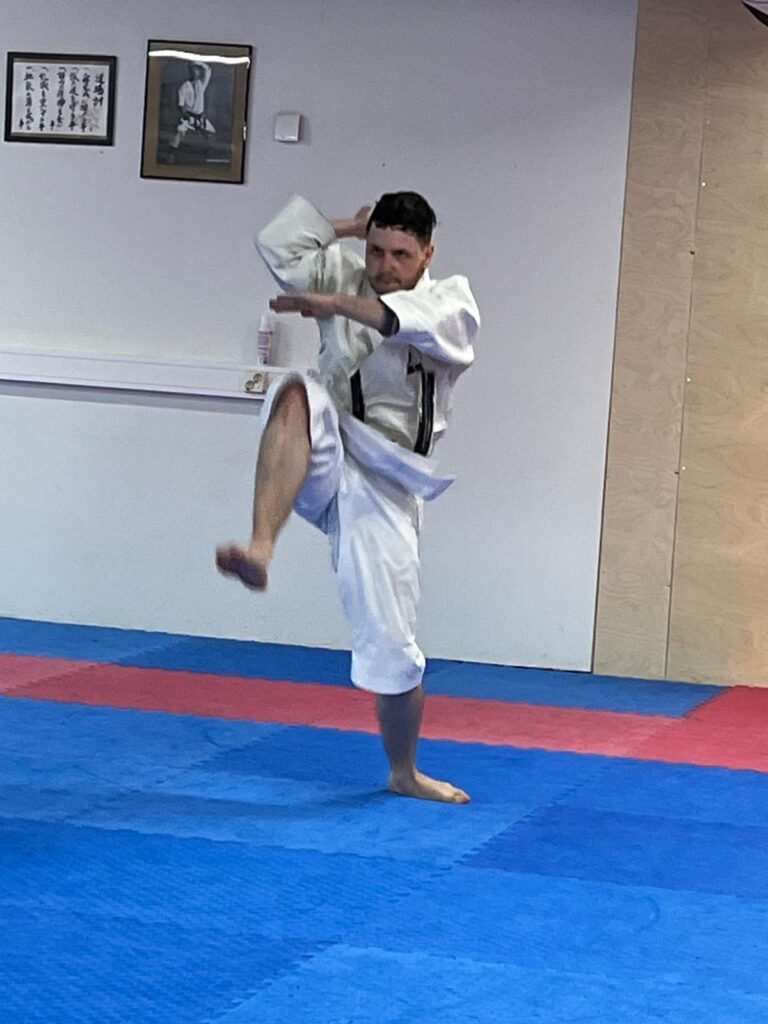
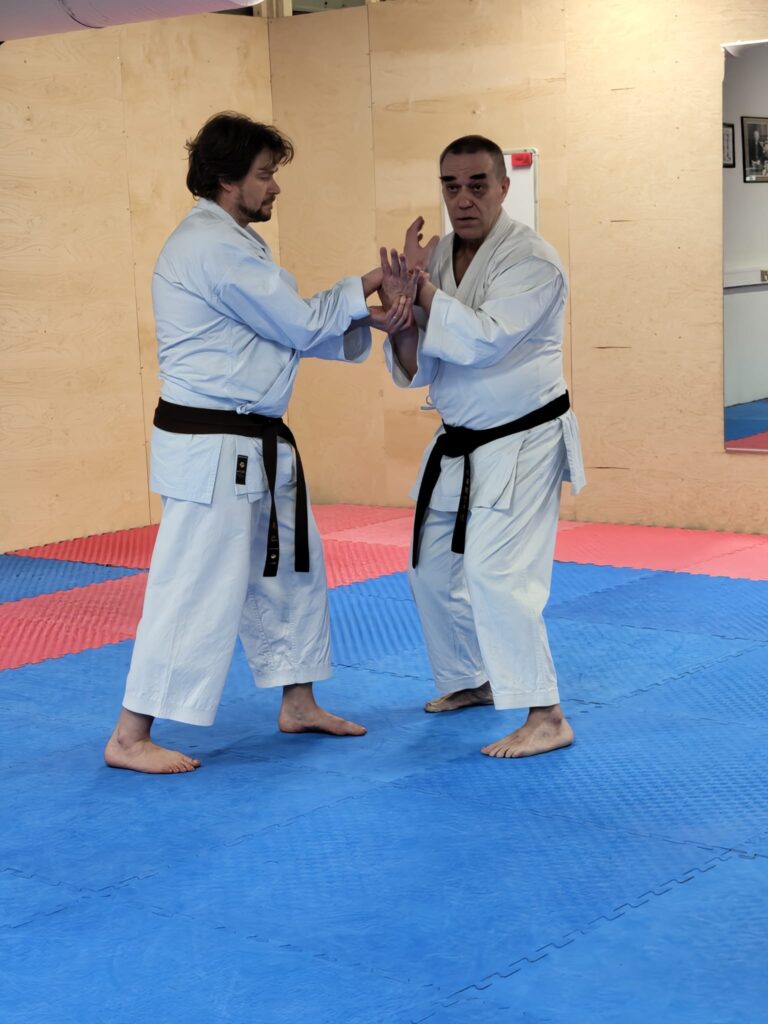
Karate general training encompasses a wide range of activities designed to develop physical, mental, and technical skills. It typically includes the following key components: kihon (basic techniques), kata (forms), and kumite (sparring). Each component serves a specific purpose in the practitioner’s development and contributes to a well-rounded martial arts training regimen.
Karate general training is a comprehensive and balanced approach to martial arts that develops physical fitness, technical skills, mental discipline, and a deep understanding of the principles and philosophy of karate. It is designed to foster growth and improvement in all aspects of a practitioner’s life.
Key components
Kihon (Basic Techniques)
Techniques: Fundamental punches, kicks, blocks, and strikes. Examples include straight punch (oi-zuki), front kick (mae-geri), and basic blocks (uke).
Stances: Various stances (dachi) such as front stance (zenkutsu-dachi), back stance (kokutsu-dachi), and horse stance (kiba-dachi).
Repetition and Drills: Practicing techniques repetitively to build muscle memory and precision.
Focus on Form: Emphasis on correct form, posture, and body alignment.
Kata (Forms)
Pattern Practice: Choreographed sequences of movements simulating combat against multiple opponents.
Technical Precision: Focus on perfecting each technique and transition.
Rhythm and Flow: Developing a sense of timing and fluidity in movements.
Breathing and Focus: Coordinating breathing with movements and maintaining mental concentration.
Application (Bunkai): Analyzing and practicing the practical applications of kata techniques in self-defense scenarios.
Kumite (Sparring)
Structured Sparring: Includes kihon kumite (basic sparring), ippon kumite (one-step sparring), and sanbon kumite (three-step sparring) to practice specific techniques and combinations.
Free Sparring (Jiyu Kumite): Less structured, allowing for a dynamic exchange of techniques in a controlled environment.
Timing and Distance: Learning to judge and control distance (maai) and timing during an exchange.
Footwork and Movement: Developing agility, balance, and effective movement.
Strategy and Adaptability: Practicing strategic thinking and adaptability against different opponents.
Conditioning and Fitness
Strength Training: Exercises to build muscle strength and power.
Cardiovascular Fitness: Activities to improve stamina and endurance, such as running, jumping rope, and high-intensity interval training.
Flexibility: Stretching routines to enhance flexibility and prevent injuries.
Balance and Coordination: Drills and exercises to improve overall body coordination and balance.
Mental and Emotional Development
Focus and Concentration: Training the mind to stay focused and maintain concentration during practice.
Self-Discipline: Developing self-discipline through regular practice and adherence to dojo rules and etiquette.
Stress Relief: Using training as a means to release stress and develop mental resilience.
Etiquette and Philosophy
Dojo Etiquette: Observing proper behavior and respect within the dojo, including bowing, addressing instructors, and following protocols.
Dojo Kun: Reciting and adhering to the dojo kun (training hall oath) and understanding the moral and ethical principles of karate.
Philosophy: Embracing the philosophical aspects of karate, such as perseverance, respect, and the pursuit of self-improvement.
Whether you are curious about karate and want to try it for the first time, or you are already a seasoned karateka looking for a shotokan style training club in Helsinki, we warmly welcome you to our trainings.
JKS Finland is a non-profit organisation and a karate club that looks after the Shotokan Karate style as developed by Tetsuhiko Asai Shuseki Shihan. Our dojo is located in Helsinki.
MEKAANIKONKATU 17 00880 HELSINKI FINLAND
info@jksfinland.fi