Kata classes

Choreographed movement patterns

For

All belt levels

Class Duration

60-90 Mins

Suitable For

Adults & over 12 years

Class Detail

2024 kata classes are incorporated to our general classes.
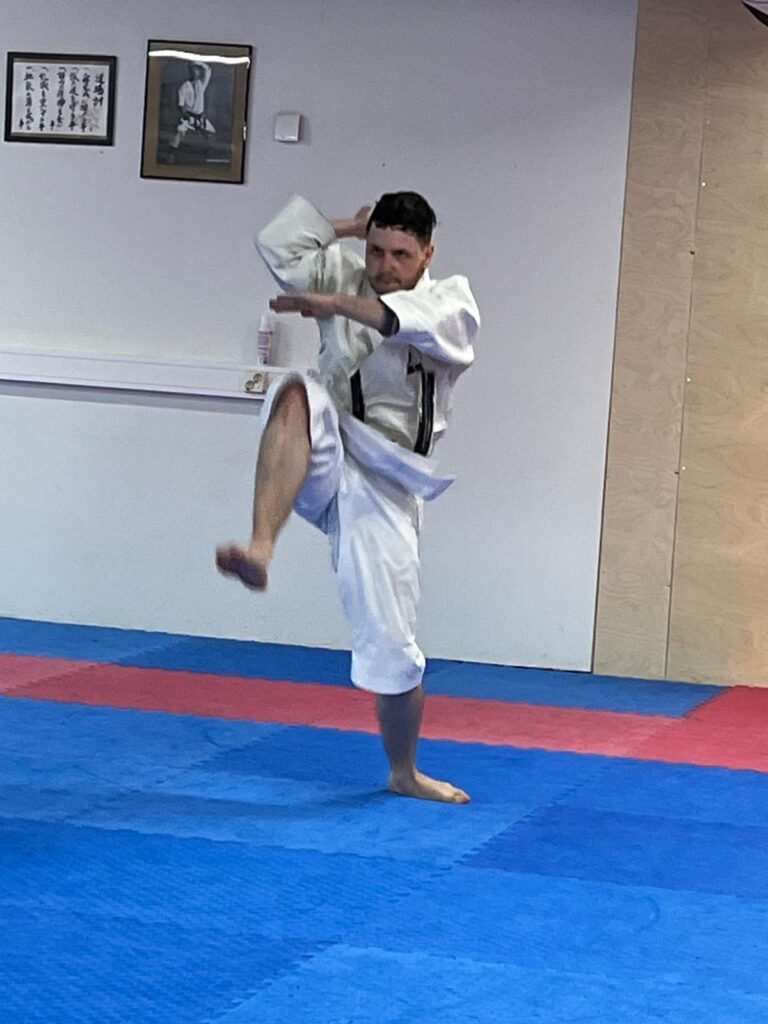
Kata training is a fundamental aspect of traditional karate and other martial arts, involving the practice and performance of choreographed patterns of movements. These patterns, known as kata, consist of a series of specific techniques including strikes, kicks, blocks, and stances that simulate a fight against multiple imaginary opponents. Kata training helps practitioners develop technical proficiency, mental discipline, physical conditioning, and a deeper understanding of martial arts principles.

Kata training methods

Individual Practice

Practitioners often practice kata individually to focus on their own technique, form, and rhythm. This allows for personalized improvement and self-reflection.

Group Practice

Kata can be practiced in a group setting, promoting synchronization and collective discipline. Group practice also helps create a sense of camaraderie and mutual support.

Instructor Feedback

Instructors provide feedback and corrections to help practitioners improve their kata performance. This guidance is crucial for mastering the finer details of each movement.

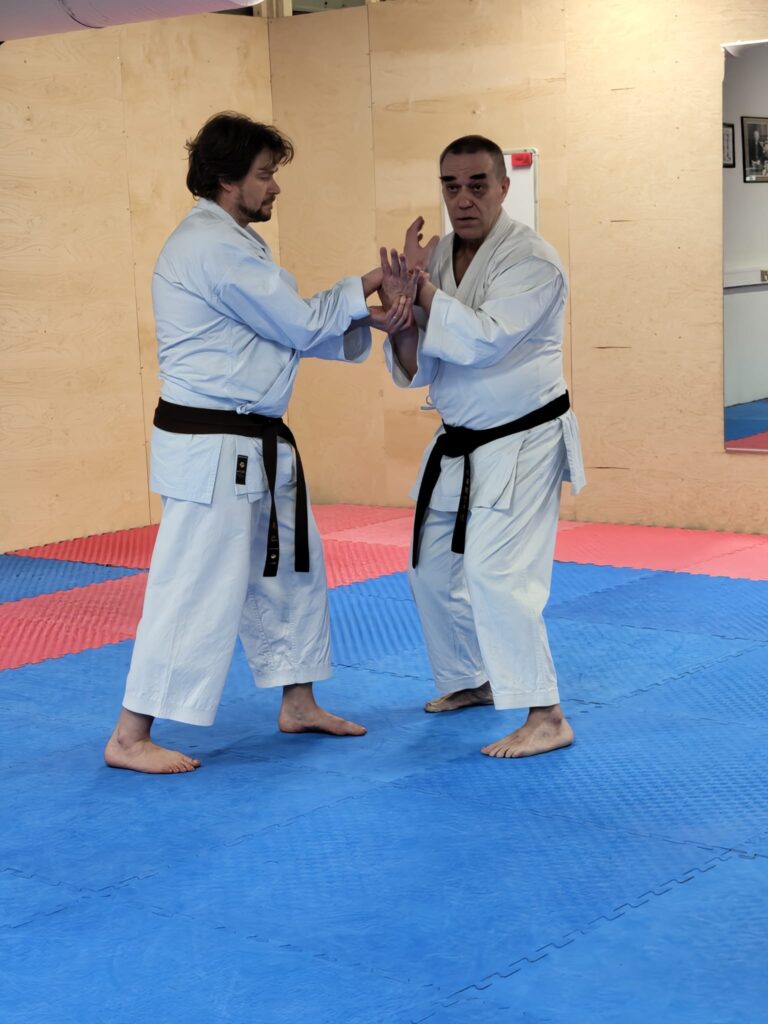
Bunkai Practice

Practitioners engage in bunkai to explore the practical applications of kata techniques. This involves partner drills and simulated self-defense scenarios.

Key components of kata training

Learning the Sequence

Practitioners first learn the basic sequence of movements in a kata. This involves memorizing the order and execution of each technique, stance, and transition.

Technical Precision

Focus is placed on performing each movement with precision. Correct form, posture, and technique are emphasized to ensure effectiveness and accuracy.

Stances and Transitions

Proper stances and smooth transitions between movements are crucial. Practitioners work on maintaining balance, stability, and fluidity throughout the kata.

Breathing and Timing

Controlled breathing and timing are integral parts of kata training. Proper breathing enhances energy management and performance, while correct timing improves the flow and effectiveness of techniques.

Focus and Mental Discipline

Kata training requires intense concentration and mental discipline. Practitioners must stay focused on the sequence and perform each movement with mindfulness and intention.

Rhythm and Flow

The kata should be performed with a specific rhythm and flow. Practitioners work on synchronizing their movements to create a harmonious and continuous sequence.

Classes includes

  • Warm up and cool down
  • Kata (choreographed movement patterns)
  • Techniques related to kata (kihon)
  • Real world applications (bunkai)
  • Stretching and mobility
  • Fitness and conditioning

Things To Bring

  • Water
  • Karate gi / sport clothes
  • Protective gear
  • Towel

Class instructors

Lisa-Lee Greenspan

6.dan, Chief Instructor, Head of Technical Committee

Ramon Baturoni

6.dan, Instructor

David Bell

4.dan, Instructor

Ben Cowley

3.dan, Instructor

Jari Reinikainen

2.dan, Instructor

Sakino Yamate

2.dan, Instructor

Giangabriele Casci

1.dan, Instructor

Join Us Now!

Whether you are curious about karate and want to try it for the first time, or you are already a seasoned karateka looking for a shotokan style training club in Helsinki, we warmly welcome you to our trainings.

JKS Finland is a non-profit organisation and a karate club that looks after the Shotokan Karate style as developed by Tetsuhiko Asai Shuseki Shihan. Our dojo is located in Helsinki.


MEKAANIKONKATU 17
00880 HELSINKI
FINLAND
info@jksfinland.fi